


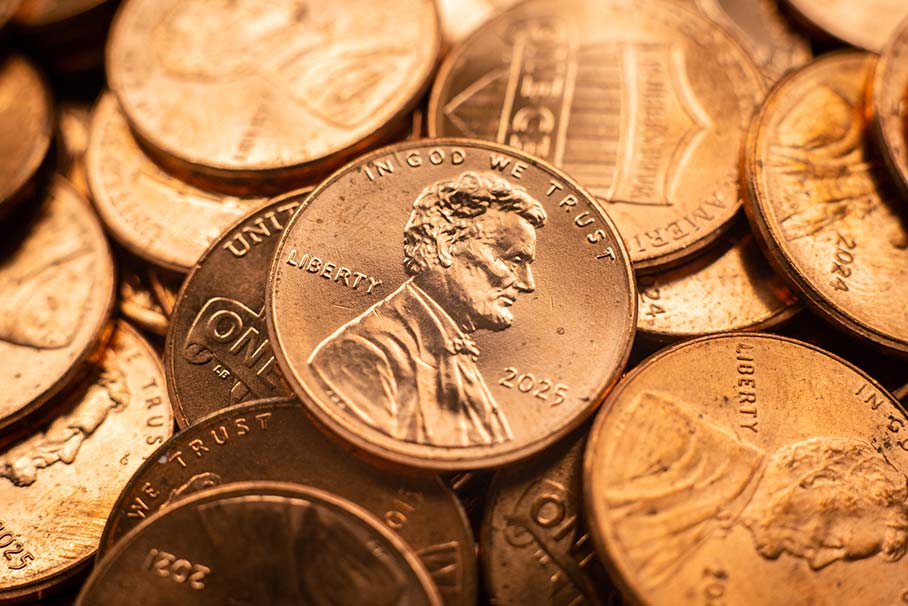
A Penny for Your Thoughts…Or Is It the End of the Penny?
You’ve probably heard the phrase, “A penny for your thoughts.” Well… what if the penny itself is becoming the thought?
The U.S. government has officially stopped manufacturing new pennies. The final penny rolled off the press on November 12, 2025, at the U.S. Mint in Philadelphia.
Before you panic and start hoarding your coin jar, here’s what this really means.
Why Stop Making Pennies?
Here’s the not-so-shocking math:
• It costs 3.69 cents to make one penny
• Fewer people are using cash
• Ending production is projected to save $56 million each year
In other words… we were literally losing money making money.
Can I Still Use Pennies?
Yes! Pennies are still legal tender, and the Federal Reserve will continue to circulate the billions already in circulation. So your spare change still counts.
Actually, consumers are encouraged to keep using the pennies already out there while businesses adapt.
What About Rounding?
If Congress passes the proposed Common Cents Act, cash transactions could be rounded to the nearest nickel.
Here’s how that would work:
• $10.02 → $10.00
• $10.03 → $10.05
Only cash transactions would be rounded. Card and digital payments would remain exact.
(And yes, state sales tax rules may vary — those decisions are handled locally.)
Is This the End of the Penny Jar?
Not quite. There are still billions of pennies in circulation. But this moment is a fun reminder that money evolves.
It might even be the perfect excuse to:
• Cash in that coin jar
• Teach your kids about rounding
• Open a savings account for those “small but mighty” deposits
Because sometimes the smallest amounts can grow into something meaningful.
From Pennies to Possibilities
Whether it’s one cent or one thousand dollars, every dollar has a purpose.
And at Unison, we’re here to help you make the most of every one.
References: Information in this article is based on data and updates from the U.S. Mint, the Federal Reserve, and proposed federal legislation, including the Common Cents Act, as available through Congress.gov.